La grâce du graphite : Évoquer l'émotion par le crayon et le papier

De la subtilité et de l'élégance des transitions en niveaux de gris aux détails intimes qui forgent un lien entre le spectateur et l'œuvre. Qu'il s'agisse de la nostalgie suscitée par les croquis traditionnels au crayon ou du réalisme émotionnel transmis par chaque trait, le graphite est un médium artistique vraiment puissant, capable de raconter des histoires fortes et de transmettre des émotions intenses. Poursuivez votre lecture pour en savoir plus sur le graphite et ses utilisations dans l'art, et découvrir comment vous pouvez vous procurer une œuvre d'art unique en graphite.

Acheter en ligne Art au graphite :

Parcourez notre gamme de Art au graphite ci-dessous, veuillez noter la disponibilité limitée des œuvres d'art originales.

What is Graphite Artwork?

Graphite artwork is a form of visual expression that utilizes graphite pencils as the primary medium. Graphite, a crystalline form of carbon, is renowned for its versatility and ability to create a wide range of tones, from the deepest blacks to the subtlest grays. Graphite art often involves the use of pencils in various hardness grades, allowing artists to achieve different levels of darkness and precision. Artists use this medium to create stunning drawings, sketches, and illustrations, harnessing the nuanced shading capabilities of graphite to bring their visions to life on paper.

What Makes Graphite Artwork Special?

Graphite artwork stands out for its timeless elegance and the meticulous skill required to master this medium. One of its distinctive features is the ability to convey a wide range of textures and details, from the smoothness of glass to the roughness of fabric. The monochromatic nature of graphite allows artists to focus on the interplay of light and shadow, emphasizing form and depth. Graphite drawings often exude a classical and sophisticated aura, and the absence of color challenges artists to rely solely on the power of contrast and precision. The result is a unique aesthetic that captures the essence of the subject with a delicate yet impactful touch.

What Kind of Techniques Are Used When Making Graphite Artwork?

Creating graphite artwork involves a variety of techniques that skilled artists employ to achieve different effects and textures. Some common techniques include:

  • Hatching and Cross-Hatching: Artists use parallel or intersecting lines (hatching and cross-hatching, respectively) to build up tone and texture. The density and direction of these lines can be manipulated to create various effects.
  • Smudging and Blending: Smudging involves using fingers, blending stumps, or brushes to soften and smooth graphite lines, creating a seamless transition between light and shadow. This technique is particularly useful for rendering realistic skin tones and atmospheric effects.
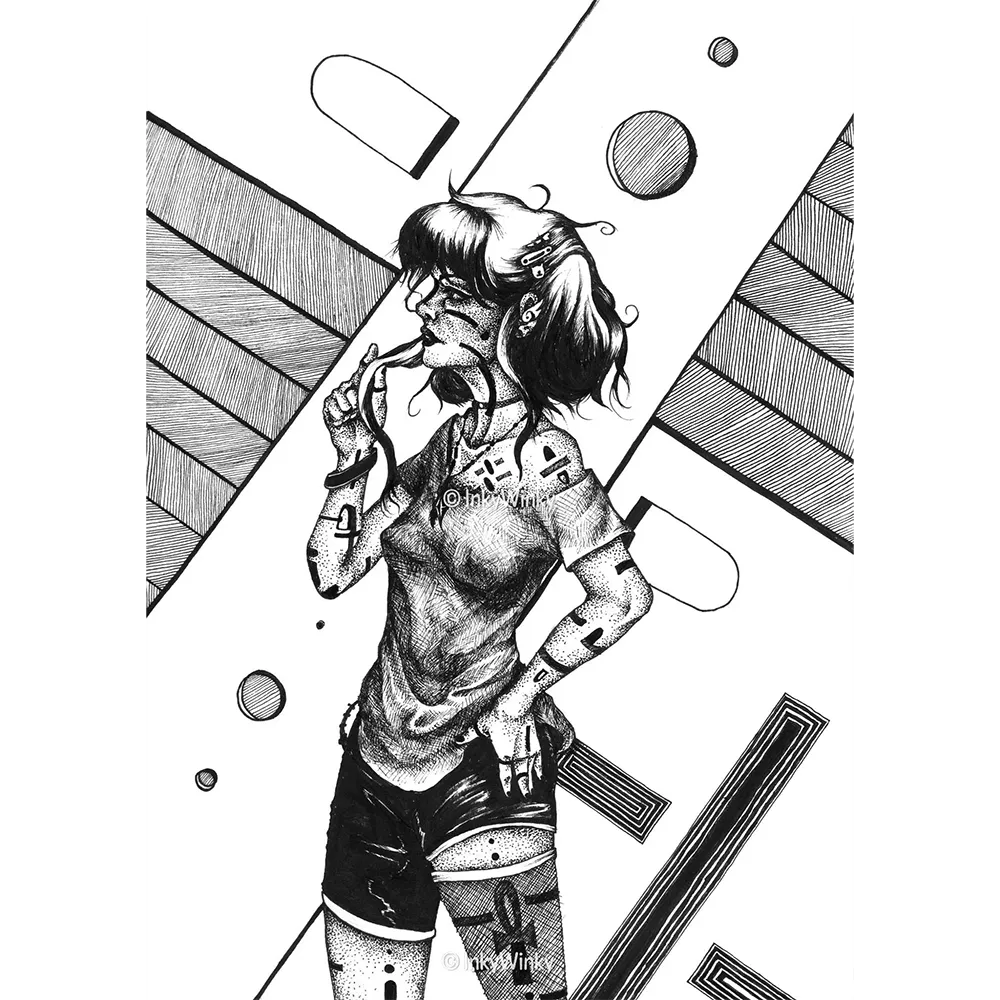
  • Stippling: This technique involves creating images using dots. By varying the density and spacing of the dots, artists can achieve a wide range of tones and textures, adding depth and detail to their drawings.
  • Erasing and Lifting: Artists strategically use erasers to remove graphite, creating highlights and refining details. This technique is essential for achieving precise highlights and capturing the reflective properties of various surfaces.

These techniques, among others, showcase the versatility of graphite as a medium and allow artists to bring their creative visions to life with incredible precision and depth.

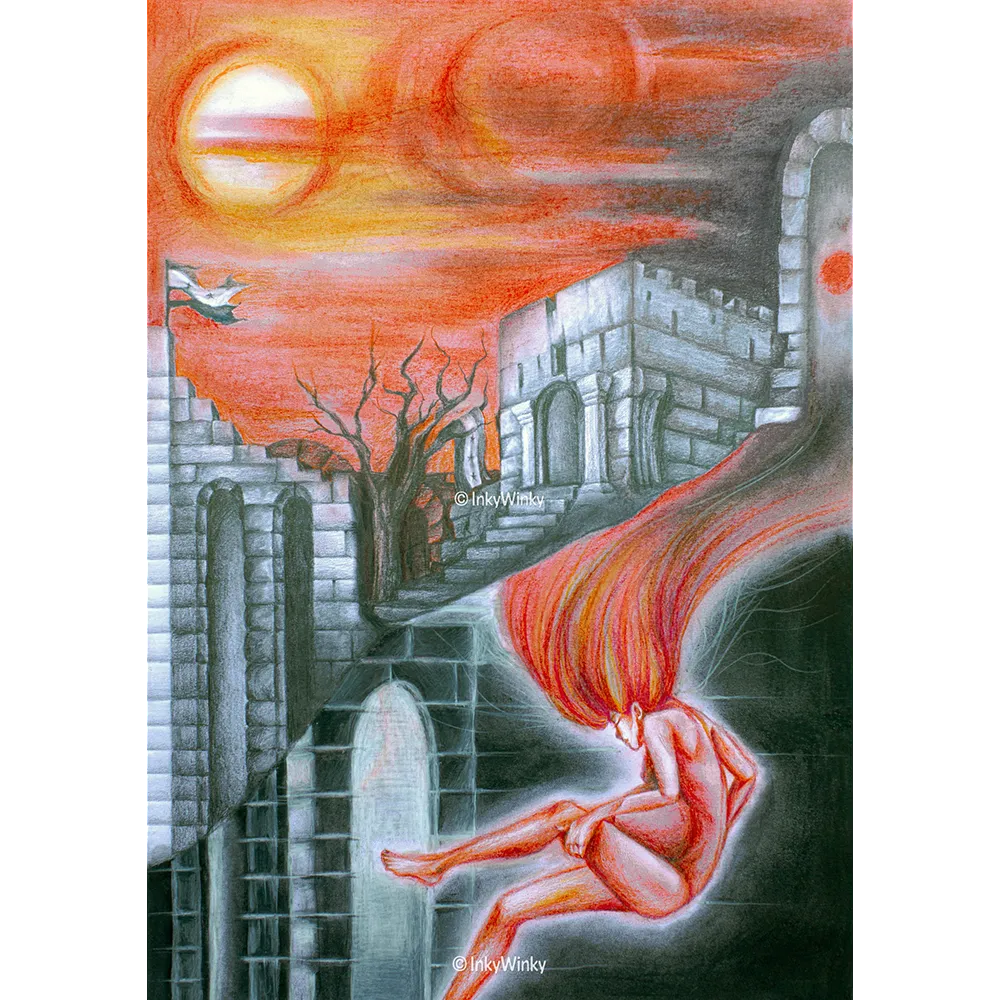
A Scene of Freedom - InkyWinky

Où puis-je utiliser Art au graphite ?

Art au graphitefonctionne bien dans de nombreux environnements, mais nos recommandations incluent :

Bureaux à domicile, Espaces créatifs, Ateliers, Garages, Cafés, Réceptions, Bureaux d'entreprise, Cabinets d'avocats, Bâtiments gouvernementaux, Bureaux de poste, Écoles, Maisons témoins et Salles à manger.

Si vous recherchez quelque chose pour une pièce différente, parcourez l'intégralité de notre magasin ci-dessous. Nous sommes certains d'avoir quelque chose pour vous.

Quels sont les thèmes communs utilisés dans l'art du graphite ?

L'art au graphite englobe un large éventail de thèmes, reflétant la diversité de l'expression artistique. Certains thèmes communs explorés dans les œuvres d'art au graphite incluent :

  • Portrait : Le graphite est souvent utilisé pour créer des portraits détaillés et réalistes. Les artistes se concentrent sur la capture des nuances des traits du visage, des expressions et des émotions, démontrant leur habileté à rendre la forme humaine.
  • Nature et Faune : La capacité du graphite à dépeindre des détails complexes en fait un médium idéal pour illustrer la beauté du monde naturel. Les artistes créent des rendus époustouflants de paysages, de plantes et d'animaux, mettant en évidence les textures et les subtilités trouvées dans l'environnement.
  • Nature morte : Les artistes utilisent le graphite pour capturer l'essence d'objets inanimés arrangés dans une composition. Ce thème permet l'exploration de la lumière, de l'ombre et de la forme, montrant la capacité de l'artiste à insuffler de la vie aux objets du quotidien.
  • Surréalisme et Fantaisie : Certains artistes utilisent le graphite pour explorer les royaumes de l'imagination et de la fantaisie. La polyvalence du graphite permet la création de scènes oniriques et d'un autre monde, repoussant les limites de la réalité.

Quelles sont les différences clés entre l'utilisation du graphite et du fusain ?

Bien que le graphite et le fusain soient des matériaux de dessin populaires, chacun offre des caractéristiques uniques qui influencent le résultat d'une œuvre d'art et différencient un médium de l'autre. Comprendre les différences clés entre les deux médiums est crucial pour les artistes cherchant à obtenir des effets spécifiques dans leurs dessins.

Tonalité et Valeur :

  • Graphite : Le graphite est connu pour sa gamme tonale subtile et précise. Les artistes peuvent créer un large spectre de gris, du plus clair au plus foncé, en variant la pression et la superposition du graphite.
  • Fusain : Le fusain produit des noirs riches et profonds, permettant des contrastes audacieux et expressifs. Il excelle dans la création de dessins dramatiques et à contraste élevé avec une large gamme de valeurs.

Précision et Détail :

  • Graphite : Les crayons graphite, en particulier ceux à mine plus dure, permettent des lignes fines et un travail détaillé. Cela rend le graphite bien adapté aux rendus complexes et réalistes.
  • Fusain : Le fusain est un médium plus expressif, souvent choisi pour ses qualités lâches et gestuelles. Bien qu'il puisse réaliser un travail détaillé, le fusain est privilégié pour sa capacité à créer de larges traits et des textures dynamiques.

Effaçabilité :

  • Graphite : Le graphite est facilement effaçable, ce qui le rend pratique pour les corrections et les ajustements. Les artistes peuvent utiliser des gommes mie de pain ou des gommes de précision pour enlever le graphite du papier.
  • Fusain : Le fusain a tendance à adhérer plus fortement au papier, ce qui rend l'effacement plus difficile. Les artistes utilisent souvent des techniques telles que le tamponnage ou l'enlèvement avec une gomme mie de pain pour créer des rehauts.

Surface et Texture :

  • Graphite : Le graphite est polyvalent et fonctionne bien sur une variété de surfaces, du papier lisse au papier texturé. Il peut être appliqué avec précision, permettant un contrôle sur la texture du dessin.
  • Fusain : Le fusain est souvent préféré sur des surfaces texturées ou rugueuses, où il peut créer des textures expressives et granuleuses. Le médium est plus tolérant sur les papiers à grain, permettant une approche spontanée et tactile.

Art au graphiteiste :

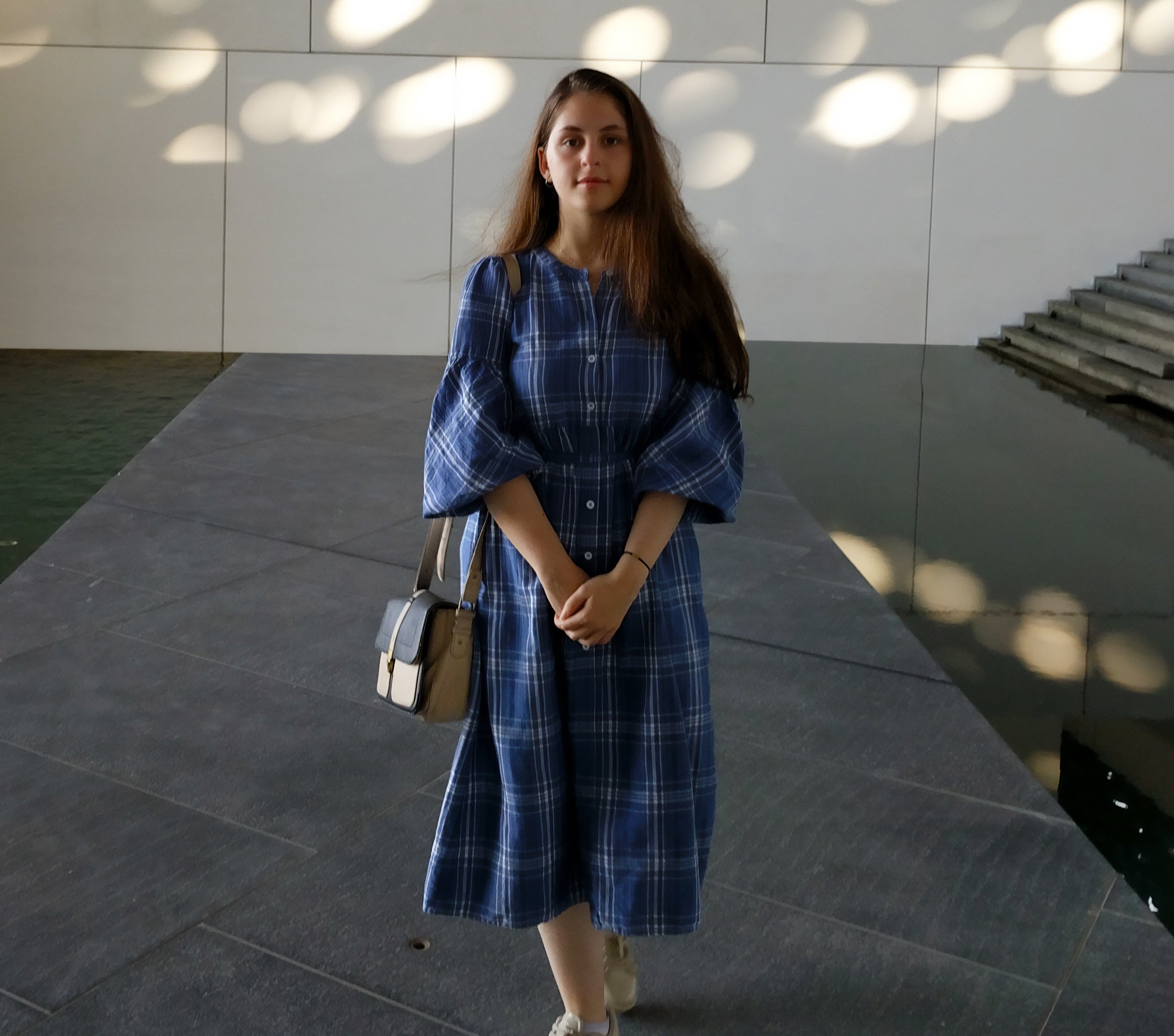
Découvrez Ayla Fowles. Born in Syria before the civil war, Ayla experienced first-hand the suffering and injustice caused by her government. Fleeing to Saudi, she lived through a different environment in a more r4eligiously conservative environment than what she was used to in Syria. As a result she spent her teenage years in her room as she desperately sought any freedom she could find, which she found that through art. Art was her form of expression and as the years went by, she practiced and practiced while she waited for an opportunity to leave.

She now gets to tell the story of her youth with the hope that she can show you how good things can come from bad situations, and to bring awareness to things she finds dear to her (or things that she thinks are really cool).

What Materials Can You Use Graphite On When Making Art?

Graphite can be applied to various surfaces, with paper being the most common. However, artists also explore other materials to achieve unique effects:

  • Paper: Traditional drawing paper is the primary surface for graphite art. The tooth of the paper allows the pencil to grip, facilitating the application of detailed lines and shading.
  • Bristol Board: Known for its smooth surface, Bristol board is favored for detailed and intricate drawings. It minimizes the texture visible in the final artwork, providing a clean and polished look.
  • Illustration Board: This rigid surface is well-suited for heavier applications of graphite. It is commonly used for illustrations and artworks that require durability.
  • Toned Paper: Artists sometimes choose paper in varying shades (usually gray or tan) to add an extra dimension to their artwork. The mid-tones of the paper can be strategically incorporated into the composition.
  • Wood: In addition to paper, some artists experiment with wood as a unique canvas for graphite art. The smooth surface allows for different mark-making techniques and provides a distinct aesthetic.

The choice of surface depends on the artist's preferences, the desired effect, and the specific requirements of the artwork in question. Each surface offers a unique texture and finish, influencing the overall visual impact of the graphite drawing.

Historically, Where Did Graphite Come From?

Graphite has a rich historical background, and its name is derived from the Greek word "graphein," meaning "to write." Here are some key points about the historical origins of graphite:

  1. Discovery in England: The first known discovery of graphite occurred in Borrowdale, England, in the early 16th century. Initially, it was believed to be a form of lead and was used by locals to mark sheep.
  2. Misidentification: Due to its similar appearance to lead, graphite was initially thought to be a form of lead ore. It wasn't until the late 18th century that chemists realized it was composed of carbon, leading to its classification as a distinct element.
  3. Pencil Development: The use of graphite in pencils became widespread in the 17th century. Initially, graphite chunks were wrapped in sheepskin or string for a makeshift writing instrument. The modern pencil, with a graphite and clay mixture encased in wood, emerged in the 19th century.
  4. Global Production: Today, graphite is a global commodity, with significant production in countries like China, India, Brazil, and Canada. It is used not only in pencils but also in various industrial applications, such as lubricants, batteries, and as a crucial component in graphene, a remarkable material with unique properties.

The historical journey of graphite reflects its evolution from a local curiosity to a globally significant material with diverse applications.

What Kind of Emotions Does Graphite Art Evoke in the Viewer?

Graphite art has the power to evoke a range of emotions in viewers, thanks to its nuanced shading, precision, and timeless aesthetic. Here are some common emotions associated with graphite artwork:

Subtlety and Elegance: The grayscale nature of graphite allows for subtle transitions between light and shadow. Viewers often experience a sense of elegance and sophistication when observing finely rendered graphite drawings.

Intimacy and Detail: Graphite's ability to capture intricate details can create a sense of intimacy between the viewer and the artwork. Whether it's the meticulous depiction of facial features or the texture of an object, viewers may feel a closeness to the subject.

  • Nostalgia: Graphite art, especially in pencil sketches, may evoke a sense of nostalgia. The traditional and classic feel of graphite drawings can transport viewers to a bygone era, reminding them of the simplicity and beauty of hand-drawn art.
  • Contemplation and Reflection: The monochromatic palette of graphite often lends itself to contemplative and reflective atmospheres. Viewers may find themselves immersed in the subtleties of the artwork, encouraging introspection and thoughtfulness.
  • Timelessness: Graphite art has a timeless quality that transcends trends and fads. This timelessness can evoke a sense of enduring beauty and a connection to artistic traditions that have spanned centuries.
  • Emotional Realism: Graphite's ability to capture realism, combined with the artist's emotional expression, can lead to an emotionally resonant experience for viewers. Whether it's a portrait conveying deep emotions or a scene with evocative lighting, graphite can evoke a strong emotional response.

In essence, the emotional impact of graphite art is multi-faceted, ranging from a quiet appreciation of its technical prowess to a profound connection with the emotions embedded in the artwork. The viewer's own experiences and perspectives play a crucial role in shaping the emotions elicited by graphite drawings.

Chat Support

Support
Typically replies within an hour

Hi there 👋

How can I help you?
×
Powered by Omni Themes